Search "what is WOOP" and Google hands you two different answers on the same results page. One is a psychology technique for reaching goals. The other is a fitness band worn by professional athletes and sold on a subscription. Same word. Utterly different products, and the confusion trips people up constantly.
This article covers what is WOOP in both senses: the goal-setting method (Wish, Outcome, Obstacle, Plan) built on decades of psychology research, and WHOOP the fitness wearable that athletes like LeBron James and Rory McIlroy strap to their arms. You'll get the four steps of the method with a worked example, the science behind why it beats positive thinking, the full pricing picture for the band as of 2026, and honest verdicts on whether the device is worth the money and why the company has copped some criticism.
What is WOOP? Two meanings, sorted in ten seconds
The word splits cleanly in two, and a ten-second check of context will tell you which one you're dealing with.
WOOP (the method): a four-step goal-setting technique, Wish, Outcome, Obstacle, Plan, developed by psychologist Gabriele Oettingen. It's used in classrooms, sports psychology, corporate coaching, and therapy. If the sentence mentions goals, students, wish, or obstacles, this is the one.
WHOOP (the company): a Boston-based wearable technology firm founded in 2012 by Will Ahmed. Its screenless band tracks sleep, heart rate, strain, and recovery around the clock. If the sentence mentions athletes, recovery scores, or battery life, this is the one. The company stylises it in all caps, which helps, but plenty of people write "woop" either way.
One more meaning worth flagging: "whoop" as an old-fashioned exclamation, a shout of excitement, as in "a whoop of joy." If you landed here from a crossword or a vocabulary quiz, that's probably your answer. (And if you're a writer hunting for related vocabulary, our guide to what "whispered" means in one word covers similar expressive ground.)
The rest of this article takes each meaning in turn, method first, because that's the more common meaning in search and the one with more practical depth.
WOOP the method: a four-step mental technique for actually hitting goals
So what is WOOP the method? It's a goal-setting framework that combines fantasising about a desired future with honestly confronting the obstacles in your way, and its creator argues that this pairing, not positivity alone, is what makes goals stick. The method was developed by Gabriele Oettingen, a psychology professor at New York University, over roughly twenty years of research on what she calls "mental contrasting." Her book about it, Rethinking Positive Thinking, lays out the full evidence base. The technique is sometimes called "mental contrasting with implementation intentions," which is a mouthful, hence the catchy acronym.
The core insight is a bit uncomfortable. Pure positive thinking, visualising your success over and over, feels great but tends to backfire. Studies in Oettingen's lab found that people who only fantasised about achieving goals (losing weight, getting a job, crushing on a classmate) actually achieved less, because their brains treated the fantasy as a reward already banked and relaxed. Mental contrasting fixes this by pairing the dream with a clear-eyed look at what stands between you and it.
The four steps of WOOP, in order
Each letter maps to a step, and the order matters. Run it like this:
Wish: Name something challenging but achievable that you want. It can be a goal for today, this month, or the next year, but it should genuinely matter to you and stretch you a little. "I want to finish the first draft of my novel" works. "I want to be happy" is too vague to plan around.
Outcome: Imagine the best result of achieving that wish, vividly and specifically. Not the vague glow of success, but the concrete scene: you cross the finish line of the half marathon in under two hours, your legs ache, your sister is cheering at the barrier. Spend a few unhurried minutes here.
Obstacle: Now flip to the honest part. Identify the internal obstacle most likely to stop you, something in you, not the world. Not "the gym is far away" but "I convince myself I'm too tired after work and skip it." Oettingen is firm on this point: internal obstacles are the ones you can actually act on.
Plan: Create an if-then plan against that obstacle: "If I catch myself saying I'm too tired after work, then I'll put my running shoes on before I sit down." These are what psychologists call implementation intentions, and they're the mechanical heart of why WOOP works.
Then you let it go. WOOP is designed as a short exercise, five minutes or so, that you can repeat daily or whenever a new goal matters. It's not a life-planning retreat.
A worked WOOP example (the kind competitors skip)
Take a writer who wants to finish a book. Run the four steps on that wish and it looks like this:
- Wish: "I want to write 500 words of my book every weekday morning."
- Outcome: "It's 9am, I've hit my word count, and the chapter is moving. I feel like the book is actually happening instead of being an idea I apologise for at parties."
- Obstacle: "I open my laptop and check the news first. Twenty minutes vanish, my head is in someone else's story, and starting my own feels heavy."
- Plan: "If I've opened a browser tab before writing, then I close it and type one sentence into the draft before touching anything else."
Notice what the plan does. It doesn't rely on willpower or mood. It hooks a specific cue (opening a browser) to a specific action (close it, write one sentence). That cue-action structure is the whole trick.
If your obstacle is always something outside yourself, you haven't found the obstacle yet. Keep digging until it's something you do.
Why WOOP beats SMART goals, in my view
I'll give you my honest opinion here, having tried both: SMART goals are great for defining what a goal is, and nearly useless for the moment you break your own promise. "Specific, Measurable, Achievable, Relevant, Time-bound" describes the target beautifully. It says nothing about Tuesday night, when you're tired and the target suddenly doesn't feel relevant.
WOOP is built for exactly that moment. The if-then plan is pre-committed, so when the obstacle shows up, the decision is already made. A comparison:
| Dimension | SMART goals | WOOP |
|---|---|---|
| Main job | Defining and clarifying the goal | Preparing you for the moment you quit |
| Handles obstacles | Implicitly ("achievable") | Explicitly, one named internal obstacle |
| Built-in failure plan | No | Yes, the if-then plan |
| Time to do it | However long | About 5 minutes |
| Backed by lab research | Framework, not a single body of research | Two decades of studies on mental contrasting |
My take? Use them together. Define the goal however you like, then run WOOP on it. But if you'll only adopt one habit, make it WOOP, because the failure moment is where goals actually die.
Who WOOP works for, and where it's used
The method has spread far beyond the research lab, and its flexibility is the reason. In education, it's popular because it works across grades K-12, and organisations like Panorama Education package it as an evidence-based intervention teachers can use for student goal-setting. In workplaces, managers use it for performance conversations. Athletes and coaches use it for competition prep. Therapists have adapted it for behaviour change.
It suits anyone who has tried pep-talk-style motivation and found it hollow. It suits people who are, as Oettingen puts it, "optimistically realistic." It's a poor fit if you want a long-term strategic planning system; WOOP works on discrete, near-term wishes, one at a time. Running it on "become a doctor" is stretching the method beyond its design. Break big ambitions into a chain of WOOPable wishes instead.
WHOOP the wearable: what the band actually is
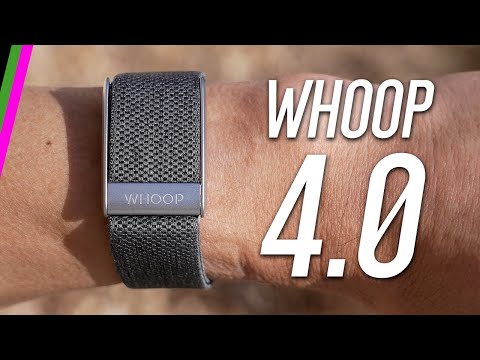
What is WHOOP, physically? A screenless fitness and health tracker that measures sleep, heart rate, strain, and recovery continuously, then turns those numbers into daily coaching in its smartphone app. There's no display on the band itself, which is deliberate: the company wants the data to change your behaviour, not to give you another glowing rectangle demanding attention. It tracks over 145 activities, from running to swimming to, yes, sex (a fact the company itself has joked about in marketing).
The pitch is simple: instead of counting steps, WHOOP tells you how hard your body worked (strain) and how ready it is for more work (recovery). Wake up, check your recovery score, decide whether today is a push day or a rest day. That loop, strain in, recovery out, is the product.
The 2026 hardware: WHOOP 5.0 and WHOOP MG
On October 2, 2026, WHOOP announced its 5.0 and medical-grade WHOOP MG devices, both 7% smaller than their predecessors, with up to 14 days of battery life according to the company's launch announcement. The smaller size matters more than it sounds, because the old band was chunky enough that side-sleepers complained. Fourteen days between charges is roughly triple what earlier versions managed.
The MG is the interesting one. Its ECG is FDA-cleared, and it offers blood-pressure insights, though WHOOP is careful to describe these as estimates rather than cuff-grade measurements. The company's "Healthspan" feature uses nine metrics to compute a WHOOP Age and a Pace of Aging, which is either motivating or existentially alarming depending on your score.
What WHOOP costs in 2026
What is WHOOP selling, exactly? Memberships, not devices, and that's the part that catches people out. WHOOP's own pricing page lists three current US tiers:
| Tier | Annual price | Monthly price | What you get |
|---|---|---|---|
| WHOOP One | $199/year | $25/month | Core sleep, strain, recovery, and fitness tracking |
| WHOOP Peak | $239/year | $30/month | Adds health and stress monitoring plus Healthspan insights |
| WHOOP Life | $359/year | $40/month | Adds ECG, irregular-heart-rhythm notifications, blood-pressure insights, priority support |
So the band hardware is effectively bundled with the subscription. Stop paying, and the band becomes a bracelet. This is the single biggest thing to understand before buying.
The company has also pushed well beyond fitness tracking. In 2026 it launched five specialised blood-test panels, Heart Health, Performance, Metabolic, Women's Health, and Men's Health, at $299 each as a one-time purchase with no membership required. It also announced US on-demand video consultations with licensed clinicians for summer 2026, a paid add-on whose price wasn't specified at announcement, plus electronic health-record syncing through HealthEx. CNET's coverage of the clinician feature framed it as the company moving from tracker toward health service, which explains both the premium tiers and some of the criticism (more on that below).
On the software side, 2026 brought voice- or text-based journaling, personalised AI check-ins, better automatic workout detection, and expanded Strava imports. The journaling bit is a small thing I genuinely like: recovery data without context is just numbers, and a 30-second voice note about a bad night's sleep makes the trends readable.
Is WHOOP worth it? An honest verdict
For a committed athlete or a data obsessive, yes, and I say that as someone who finds step counters a bit pointless. If you train seriously, WHOOP's strain-and-recovery model gives you something no step count can: permission to rest. The sleep tracking is widely regarded as best-in-class among consumer wearables, and the screenless design means you can wear it 24/7 without feeling monitored by a tiny phone.
For everyone else, it's probably overkill. Three honest caveats:
- You must pay forever. At $199 minimum per year, a WHOOP is a subscription you wear. Over five years you'll spend $995 or more. A one-off-purchase watch might be cheaper.
- Accuracy has limits. The blood-pressure insights are estimates, not medical measurements. Useful for trends, not for diagnosis.
- The app can create anxiety. A low recovery score on a day you feel great is genuinely disorienting. Some people end up serving the score instead of their body.
So should you buy one? If you already train with structure and want a coach on your wrist, buy it. If you want to know whether you walk enough, get a $30 band and save the money.
Is WHOOP actually better than an Apple Watch?
Different tools, and the honest answer depends on what you want measured. The Apple Watch is a smartwatch that tracks fitness among a hundred other jobs: calls, payments, notifications, an ECG, a screen. WHOOP is a sensor that does one job continuously and never shows you anything on the band itself.
What is WHOOP better at than an Apple Watch? Sleep and recovery depth, battery life (14 days versus daily charging), and wearing it invisibly. The Apple Watch wins on everyday utility, on-demand accuracy during workouts, and not requiring a subscription. Plenty of serious athletes wear both: WHOOP on the upper arm or torso strap for recovery data, Apple Watch for the day's logistics. If you can only have one and you're not an athlete, get the watch. If training recovery is your obsession, get WHOOP.
Why is WHOOP controversial?
The company has taken fire from three directions. First, its move into healthcare territory, clinician consultations, blood tests, FDA-cleared ECG, invites scrutiny that fitness gadgets never faced, and DC Rainmaker's coverage of the company's defensive posture on future features captures how skeptically the specialist press now watches its announcements. Second, pricing changes have annoyed loyal users; when membership tiers were restructured in 2025, existing members who'd bought in under the old lifetime-ish model found the ground shifting, and the internet does not forget. Third, like any company selling health claims, it walks a line between coaching and medicine, and its blood-pressure "insights" and illness-detection features sit close to that line.
None of this makes the product bad. It makes it a company whose claims deserve the ordinary skepticism you'd apply to any health tech, which is more than its fans usually give it.
Five questions the sections above don't answer
What is WOOP used for beyond classrooms and gyms? Everyday self-management, mostly. People run it on things like cutting evening screen time, finally having a conversation they've been avoiding, or getting invoices out on time. The method doesn't care how small the wish is; much of the original research involved ordinary health habits, not just athletic or academic goals.
Does the WOOP method need an app or a workbook? No. Pen, paper, five minutes. That's the whole kit, and it's a big part of why teachers and coaches adopted it: nothing to install, nothing to pay for, nothing to learn beyond the four letters.
Can you swim and shower with a WHOOP band? Yes. It's built for 24/7 wear, and swimming is one of the 145-plus activities it tracks. You only take it off to charge, and with 14 days of battery on the 5.0 hardware, that's roughly every other week.
Does WHOOP work without a membership? Not really, no. The hardware is bundled with the subscription, so an unpaid band is a bracelet. Judge the cost over the full time you'd keep the subscription, not just year one.
Is a WHOOP a medical device? Only partly, and only at the top tier: the ECG on the WHOOP MG is FDA-cleared, but the blood-pressure insights are estimates, and the company stops short of diagnostic claims. Treat the whole thing as wellness coaching, not as a doctor.
Which one should you actually do something about?
If you came for the method, your next step costs nothing: pick one wish for this week, and before bed tonight, run the four steps on paper. Wish, outcome, obstacle, plan. If your obstacle keeps coming out as "time," run it again; that's almost never the real obstacle.
If you came for the band, trial the math first: three years of the cheapest tier is $597. Decide whether any subscription can hold your interest that long, and if the answer is no, wait for a watch you can buy once.
And one workflow tip that sounds odd but works: both halves of this question involve a lot of talking. Journaling your WOOP wishes out loud, or noting what your recovery score was and why, is faster spoken than typed. That's exactly the gap our own product, GhostWriter, fills on macOS: it turns your spoken words into clean, punctuated, ready-to-paste text in any app, so a five-minute WOOP session or a post-workout journal note becomes a voice note instead of a typing chore.
Five minutes tonight is all either one needs: four lines on a page, or a subscription decision you've actually thought through. Do that, and you'll know more than most people who've worn the band for a year or read three books on goals.